
COMPANION DIAGNOSTIC COMPANY
CHEMOTHERAPY & IMMUNOTHERAPY
GLOBAL LEADER OF IMMUNE
MONITORING AND BIOMARKER
THE NEXT GENERATION
HEALTHCARE LEADER


Immune Monitoring
Immune monitoring of tumor micro-environment,
blood immune cell phenotyping, circulation cytokine analysis.
Development of immune monitoring platform and kit.

Diagnosis
Development of early diagnosis kit for Alzheimer's, prostate cancer and cardiovascular diseases.
Development of multiplex cytokines detection kit.

Companion Diagnosis
Development of companion diagnosis kit for personalized medical treatment, biomarker diagnostics and immunotherapy.
ABOUT US
WE ARE THE TRUSTED EXPERTS
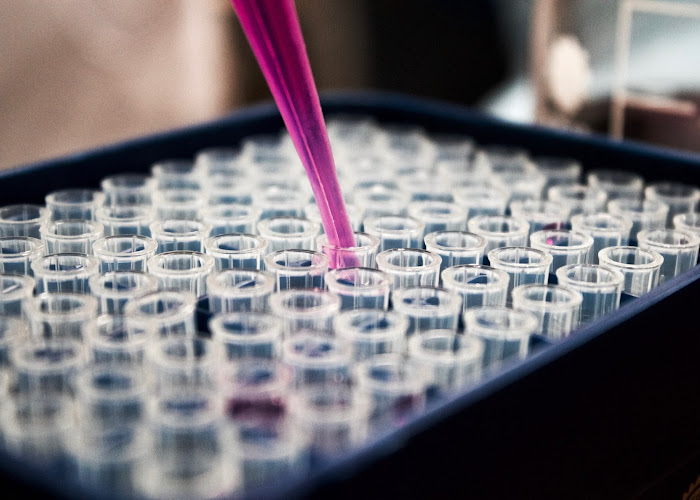
Laboratories used for scientific research take many forms because of the differing requirements of specialists.
prismCDX, based on its innovative technology and scientific expertise, aims to provide solutions for the appropriate immunotherapy for individual patients. Recently, anticancer immunotherapy has helped to cure cancer successfully. However, anticancer immunotherapy requires analytical methods to comprehensively understand the complexity of the cellular level in the tumor microenvironment because treatment prognosis may vary depending on cancer, immune cells, biomarkers, and biological environment. prismCDX’s immune monitoring technology will help you fully understand the patient’s immune status and apply the right medication to the individual patient. prismCDX is committed to the growth of global healthcare by developing technologies for diagnosis and companion diagnosis with unique technology.
C E R T I F I C A T I O N


Multiplex IHC
Full automation system
7-plex staining
Cell phenotyping in tumor micro-environment
Ultra-sensitive ELISA
Ultra-sensitive biomarker assay
Low concentration {fg/ml} detection
1000’s more targets

CyTOF (Mass cytometry)
The highest-resolution profiling of cell phenotype and function available
Cell Cycle, T cell immuno-Oncology
M u l t i p l e x I H C
Cell Phenotyping In Tumor Micro-environments
Immune Cell Phenotyping In Solid Tissues
Our approach is to allow different phenotypes to be visualized and quantified simultaneously in the same tissue section, enabling researchers to study the relationships and distribution of these cells within tumors and within the tumor micro-environment.
Using standard FFPE (Formalin-fixed, Paraffin-embedded) biopsies.

Work Flow For Multiplex IHC

M u l t i p l e x I H C I m a g e s
Multi-7-plex image (CD20, CD4, CD8, FOXP3, PD-L1, CK, DAPI)
M u l t i p l e x I H C I m a g e s
Single image - CD20
M u l t i p l e x I H C I m a g e s
Single image - CD4
M u l t i p l e x I H C I m a g e s
Single image - CD8
M u l t i p l e x I H C I m a g e s
Single image - FOXP3
M u l t i p l e x I H C I m a g e s
Single image - PD-L1
M u l t i p l e x I H C I m a g e s
Single image - Pan-Cytokeratin
- 01
- 02
- 03
- 04
- 05
- 06
- 07
S E R V I C E A B L E M A R K E R

H U M A N
CD3, CD4, CD8, CD11b, CD11c, CD14, CD15, CD16, CD20, CD31, CD33, CD39, CD44, CD45, CD45RO, CD56, CD57, CD66b, CD66c, CD68, CD69, CD73, CD103, CD115, CD133, CD137, CD155, CD163, CD195, CD206, CD326, AFP, ALDH1/2, Alpha SMA, Bax, Bcl2, BDNF, Beta-actin, CA9, CCR7, cGAS, CK, CSF1R, CXCL10, CXCR5, DOG1, E-cadherin, EGLN1, Estrogen receptor alpha, FGB(fibrinogen), Fibrin, FOXP3, Glut1, Granzyme B, HePTP, Her2, HLA Class I, HLA Class II, IDO, IL15, IL17A, Ki67, LAG3, LRRC15, MAGEA1, Mannose receptor, M-CST, MPO, N-cadherin, NDRG1, NELFA, Oct4, Pan-keratin, PD-1, PD-L1, Phospho-AKT, Phospho-Stat1, Phospho-Stat3, Phospho-Smad2, Phospho-Smad3, PSMB10, PVR, ROR gamma T, SLAMF6, Snail, SOX2, SOX10, SP-B, T-bet, TBR2, TCF1, TCF8, TERT, TGF-bata, TGF-beta1, TGFBI(BIGH3), TIGHT, TIM3, TrkB, Vimentin, WT1, Xct, and etc.
Inquiry for other antibody settings

M O U S E
CD3, CD4, CD8, CD11b, CD11c, CD19, CD20, CD25, CD31, CD45, CD56, CD68, CD73, CD80, CD86, CD161c, CD163, CD206, AFP, Active caspase3, alpha-SMA, Arginase2, cGAS, CXCL9, CXCL10, E2F8, EGFP, FAM20c, FOXP3, GIP, GLP1, GPC3, Gr1 (Ly6G+Ly6C), Granzyme B, IBA1, IFN-gamma, IL-1beta, IL-6, Ki67, Ly6G, LYVE1, MAGE1, MCP1, PD-1, PD-L1, PDPN, Xcr1, and etc.
Inquiry for other antibody settings
U l t r a - S e n s i t i v e E L I S A
Power of Ultra-Sensitive ELISA Technology
Digital vs. Analog Detection


Work Flow For Ulita-Sensitive ELISA

Multiplexed Immuno-assays


H O M E B R E W A S S A Y


Development of Diagnosis Kit by using HOMEBREW assay
Development of early diagnosis kit for Alzheimer's, prostate cancer and cardiovascular diseases.
Development of multiplex cytokines detection kit.
C y T O F
Mass Cytometry
CyTOF (Mass Cytometry)
The highest-resolution profiling of cell phenotype and function available
Biological Heterogeneity
Complexity of biological systems and analysis of high-dimensional proteomic panels
- 01
- 02
Work Flow For CyTOF

Immune Profiling Assay
Human PBMC / Using 30 Biomarkers


t-SNE analysis [Immune cell subsets]
t-SNE gating analysis of immune cell subsets. Immune cell subsets were identified and manually gated in the t-SNE space according to the signal strength of the phenotypic marker.

t-SNE analysis [T lymphocyte subsets]
t-SNE gating analysis of T lymphocyte subsets. T lymphocyte subsets were identified and manually gated in the t-SNE space according to the signal strength of the phenotypic marker.

t-SNE analysis
Expression of biomarker displayed on t-SNE plot.

SPADE analysis
SPADE presents a spanning tree analysis of density normalization events. Through a combination of downsampling, clustering and minimal spanning tree, it provides intuitive visualization of high-dimensional single cell data to support data-driven cellular heterogeneity analysis.
C O N T A C T
Tel : 82-31-8077-9838 E-mail : info@prismcdx.com
개인정보 수집 및 이용동의 / 약관 보기